

Evidence Score: A-
Score: 23/25 92%
Date discovered: 5/5
According to Dr. Stefan Wimmer, the use of Egyptian writing in the ancient Levant was not first discussed until the early 20th century with many attestations discovered during the 1960’s.
Scholars and religious leaders of the 19th century found the idea of Hebrew use of Egyptian language “improbable and really absurd”
The presence of Egyptian hieratic in Levantine inscriptions of the first millennium BC directly challenges the historical understanding of 1829 and the assertions of critics for many decades after the publication of the Book of Mormon
Biblical support: 4/5
Connections between Egypt and Israel are prevalent throughout the Biblical text, lending to the plausibility that Hebrew speakers could write in a form of an Egyptian language if the desired, however, the text does not make any record of such writings so biblical support remains somewhat interpretative.
Archeological support: 5/5
over 200 examples of Levantine Hieratic inscriptions have been found dating to the first millennium BC, some even recording religious topics of the Israelite people.
Scholarly collaboration: 4/5
While Dr. Wimmer states that the use of Egyptian Hieratic in Iron Age Levantine inscriptions has become “firmly recognized and unanimously accepted” some critical scholars insist that such inscriptions do not meet the requirements of “reformed Egyptian” While this likely stems from preconceived bias or a misunderstanding of the Book of Mormon claim, there is still a level of interpretation that may be considered.
Correlation to text: 5/5
Artifacts have been found using Egyptian writing for Hebrew religious topics in the very same time and region in which Nephi wrote of “the language of my father, which consist of the learning of the Jews, and the language of the Egyptians”
See all articles related to Reformed Egyptian in the database
Nephi describes the language he wrote his record in as, “the learning of the Jews, and the Language of the Egyptians”. (1 Nephi 1:2) The prophet Mormon, nearly 1,000 years later would name this language “reformed Egyptian” (Mormon 9:32)
Critics, both historic and modern, have been quick to attack the claimed existence of such a language. Origen Bacholer referred to it as “humbug”1 Reverend M.T. Lamb in 1887, called the idea of Israelites using a form of Egyptian, “very improbable and really absurd” writing “it is therefore inconceivable that a true-born Jew a real lover of his own people, loyal and patriotic as he professes to have been, would have been willing thus to insult his people, or that the Jews around him would have endured the insult.”2
Historical Evidence
Continued archeological research however has directly challenged these assertions. Dr. Stefan Jakob Wimmer, a renowned German scholar, not a member of the LDS faith, said in 2006:
“The use of Egyptian Hieratic signs in Iron Age Levantine inscriptions was discussed eighty years ago for the first time, and by now has been firmly recognized and unanimously accepted”3
In a 2008 paper, Dr. Wimmer coined the phrase “Palestinian Hieratic” (“Palästinisches Hieratisch” in his native German)4 to describe this phenomenon.
Attestations of this writing form, called Palestinian hieratic by Dr. Wimmer, appear in numerous forms, ranging from Egyptian numerals interspersed with Hebrew writing to Hebrew religious text written entirely in Egyptian hieratic. With such a diverse range it is not unreasonable to align them with Nephi’s description of “the learning of the Jews and the language of the Egyptians”.
It seems indeed that “the learning of the Jews” was in fact anciently recorded on occasion in “the language of the Egyptians”.
In 1969, a Heiratic fragment was published which exhibited both Hebrew and Hieratic scripts intermingled. Sh. Yeivin wrote regarding this mixture of languages:
According to Dr. Wimmer these discoveries began to be discussed around 1926. However, it was during the 1960’s that a large number of such hieratic writings began to be discovered in the areas inhabited by Israelites during the first temple period.
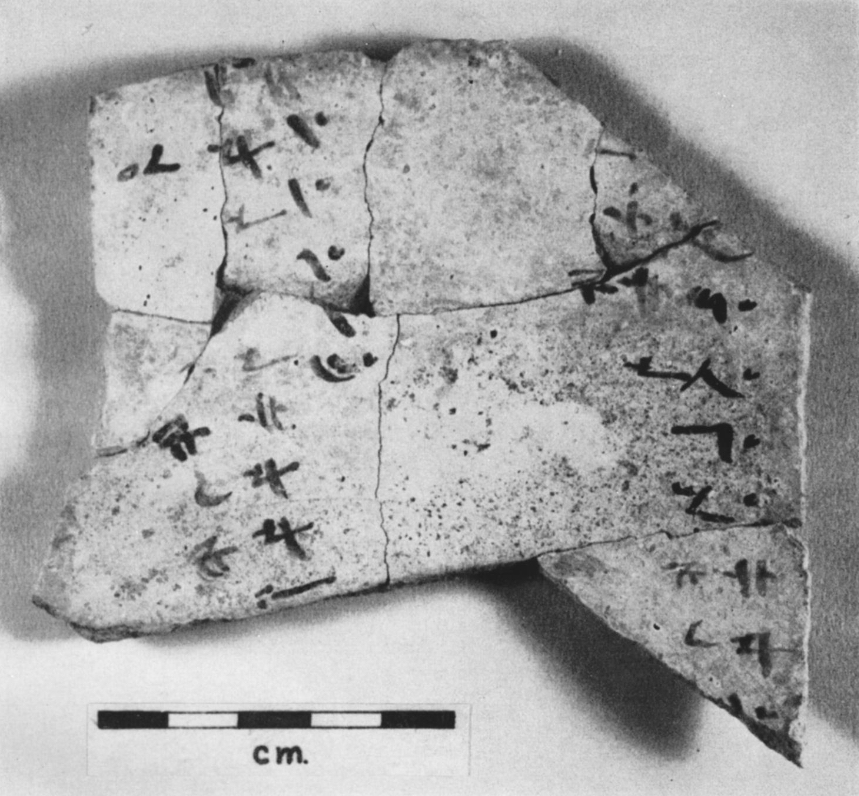
Heiratic ostraca found at tel Arad 1965
YEIVIN, S. “A Hieratic Ostracon from Tel Arad.” Israel Exploration Journal 16, no. 3 (1966): 153–59. http://www.jstor.org/stable/27925056.
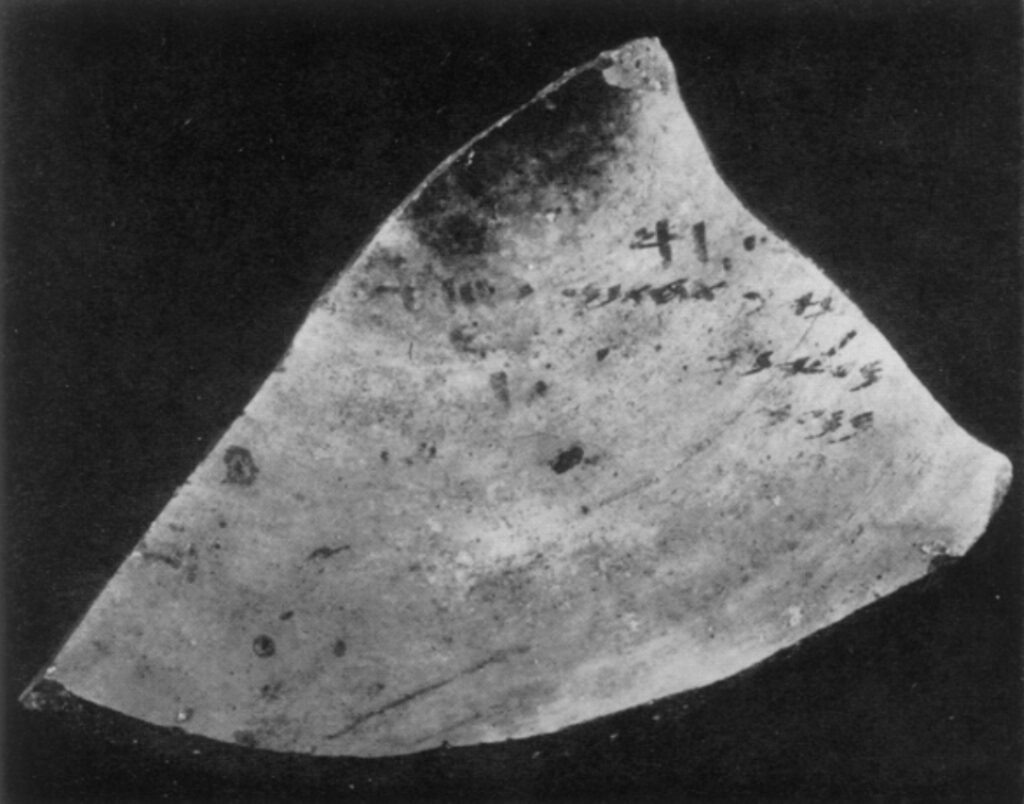
Ostracon found in 1969 at Tel Arad by Yohanan Aharoni exhibiting both Hebrew and Heiratic intermingled
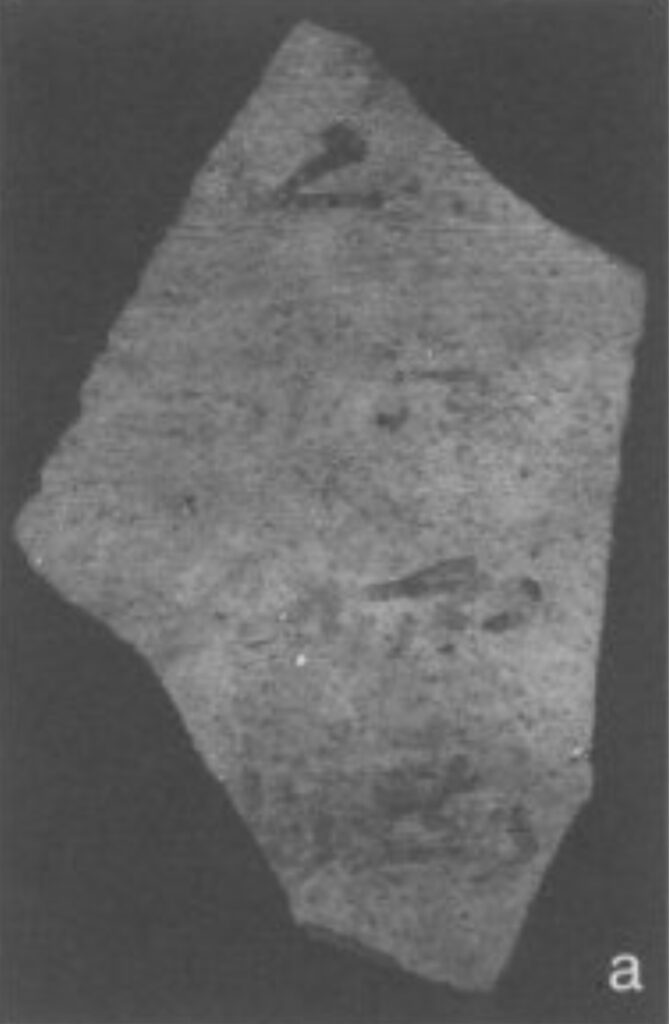
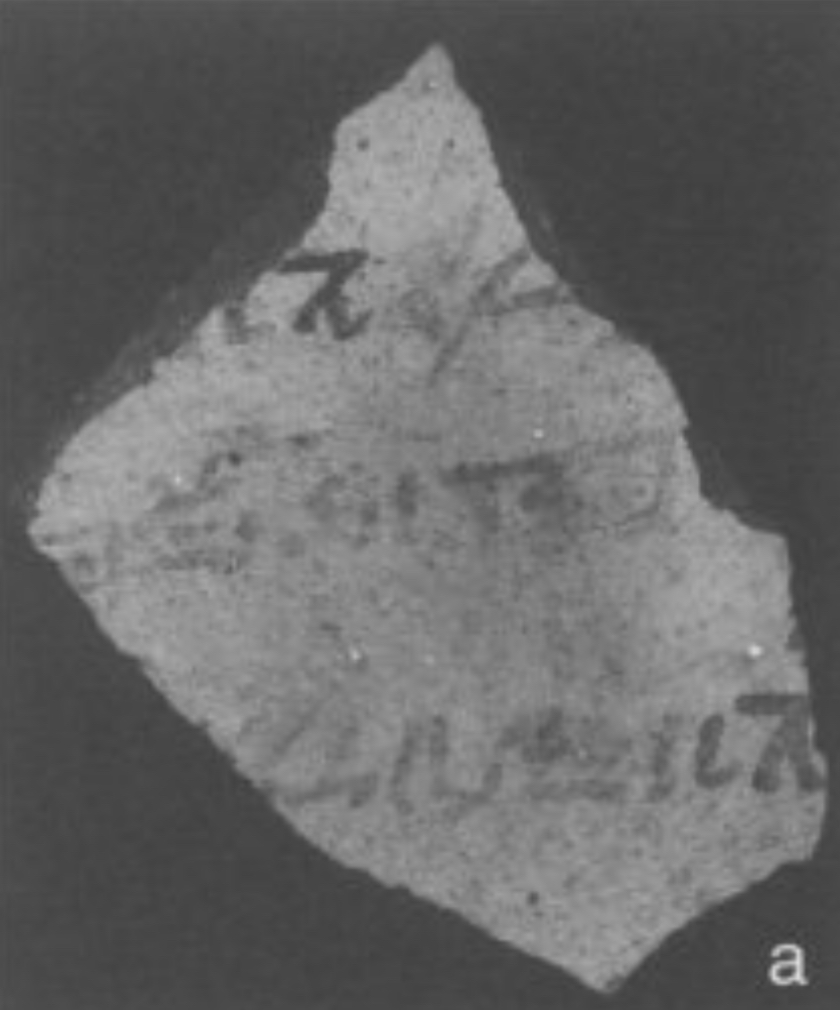
Heiratic Ostraca found at Tel Farrah (South) publish in 1999
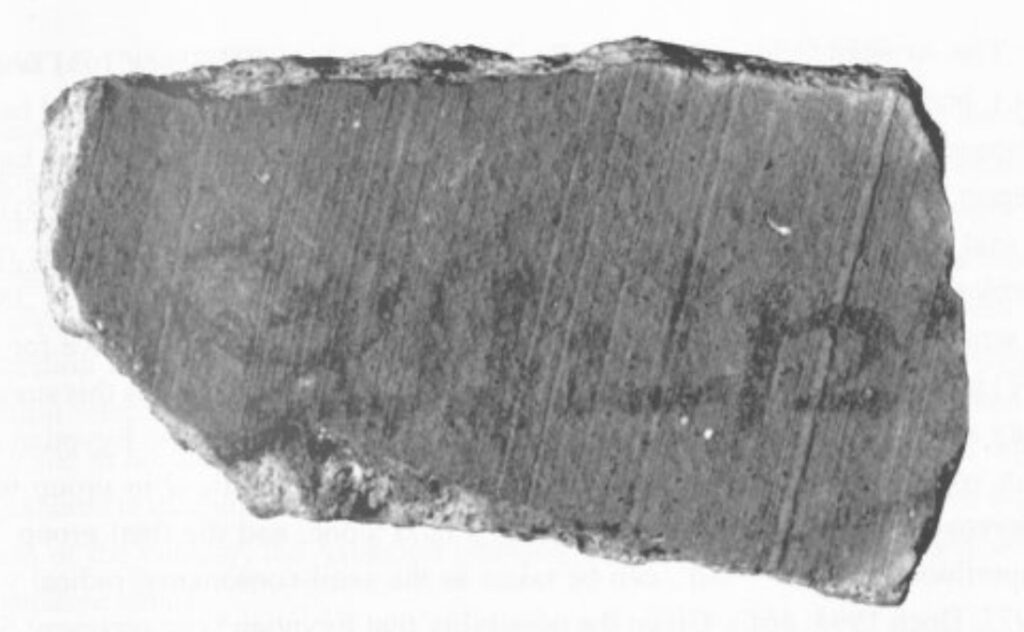
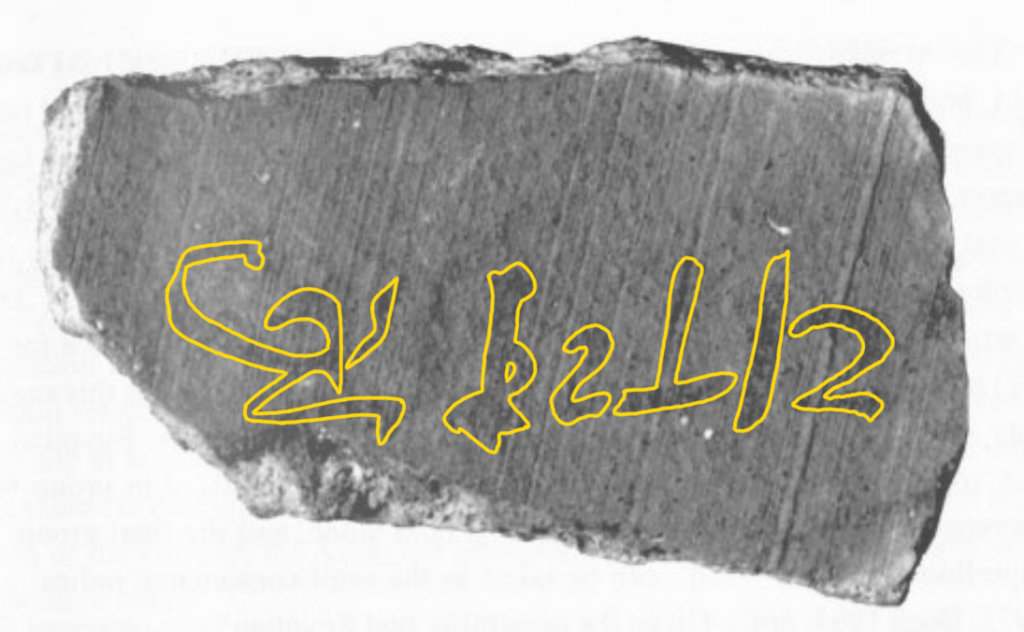
Ostraca from Ashkelon written in Egyptian heiratic, translated by Wimmer to read “he said there would be no prophet”
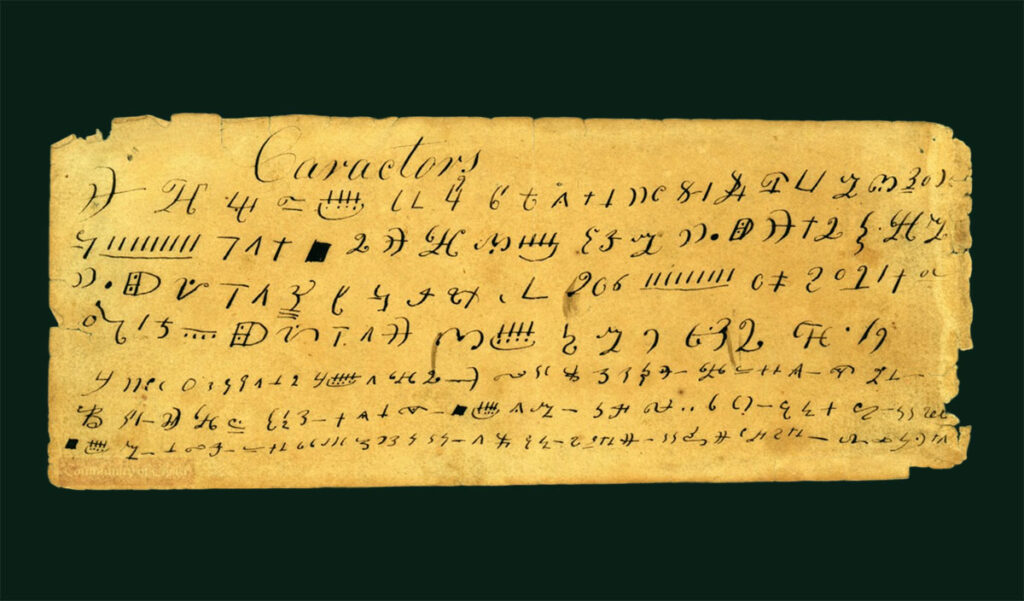
- Mormonism exposed pp 27
- The golden bible pp 89-90
- Wimmer, Iron Age levantine
- Stefan Wimmer, Palastinisches Hieratisch. Die Zahl und Sonderzeichen in der althebraishen Schrift (Wiesbaden: Harraossowitz, 2008)
Sh. Yeivin. (1969). An Ostracon from Tel Arad Exhibiting a Combination of Two Scripts. The Journal of Egyptian Archaeology, 55, 98–102. https://doi.org/10.2307/3856005