

Evidence Score: B+
Score: 22/25 88%
Date discovered: 5/5
Discoveries identifying Jerusalem not only as a city, but a land and also Bethlehem as part of that land are recent
These discoveries directly contradict the historical understandings of 1829 and even uninformed individuals today.
Biblical support: 3/5
The term “land of Jerusalem” is not expressly used in the Bible however, there are passages that hint at this theme.
In most cases “the city of David” refers to Jerusalem, however, in the Nativity story it refers expressly to Bethlehem hinting at a more nuanced understanding, however, this is open to interpretation
Archeological support: 5/5
Multiple letters and other artifacts have been found in the levant using the phrase “land of Jerusalem” just as it is used in the Book of Mormon
Scholarly Collaboration: 4/5
Most scholarly experts in the middle east acknowledge the fact that anciently Jerusalem was known both as a land and a city and that Bethlehem was considered part of that land, however, some strict biblical scholars do yet recognize this and continue to insist otherwise.
Correlation to text: 5/5
The phrase “land of Jerusalem” is used frequently throughout the Book of Mormon, as well as the “land of our forefathers”, the birth of Christ is prophesied to take place “at Jerusalem”. The attestations of similar phrases do correlate with text of the Book of Mormon.
“And behold, he shall be born of Mary, at Jerusalem which is the land of our forefathers, she being a virgin, a precious and chosen vessel, who shall be overshadowed and conceive by the power of the Holy Ghost, and bring forth a son, yea, even the Son of God. ” (Alma 7:10)
An early attack against the Book of Mormon which remains persistent refers to a Messianic prophecy made by the prophet Alma in the Book of Mormon approximately 83 years before the birth of Christ. In The Book of Mormon, Alma states that Christ would be born “at Jerusalem which is the Land of our forefathers” (Alma 7:10)
For critics, this seems to be an easy attack. In 1838 Origen Bachelor wrote in “Mormonism Exposed”
“Bethlehem is six miles from Jerusalem, The expression, ‘at Jerusalem’, means in it, not near it. Here then is a flat contradiction of scripture.”1
For the lay reader of scripture, this may seem problematic. Even some biblical scholars will continue to present this today as evidence against the Book of Mormon, however, the honest critic would do well to ask themselves, if Joseph Smith, or any other imagined 19th century author, could be knowledgeable enough on the Bible to quote, paraphrase and elaborate on Isaiah at length, yet simultaneously be ignorant enough to be unaware the Savior was born in Bethlehem?
The City of David
While we are told by Matthew, Luke and John that Christ was born in Bethlehem, Luke also uses another name in reference to the place of Christ’s birth: “The City of David”
It is Luke who clearly provides the most detailed account of the Nativity, and it is his account which nearly every Christian household will read each Christmas season. Undoubtedly, anyone who is familiar with Christianity has heard the passage of Luke:
And Joseph also went up from Galilee, out of the city of Nazareth, into Judæa, unto the city of David, which is called Bethlehem; (Luke 2:4)
the most interesting thing about this verse is the reference to “the city of David”. You will also recognize this phrase as it was used again as the angels appeared to the shepherds in the field, where they told them:
For unto you is born this day in the city of David a Savior, which is Christ the Lord. (Luke 2:11)
Two explicit references to the city of David in Luke’s account of the Nativity. It is worth noting that this is the same number of occurrences of the name Bethlehem.
It has certainly been my experience that many Christians, when hearing the phrase “the city of David” think immediately, and often only, of Bethlehem. While Luke’s two mentions of “the city of David” are the only instances of the name found in the New Testament, (and both in the same chapter) it is mentioned far more frequently in the Old Testament. Within the Old Testament, the phrase “city of David” is used 46 times in total, yet never as a name for the city of Bethlehem.
In the fifth chapter of 2 Samuel, we learn that David captured the fortress in the city of Jerusalem, increased its fortifications and called it the city of David. This occured about one thousand years before the birth of Jesus Christ. From these first mentions (2 Samuel 5:7,9) on, in every single instance of the Old Testament, the term “city of David” references the city of Jerusalem. The ark of the covenant is brought to the city of David (2 Samuel 6:12), the City of David is referred to as Zion (1 Chronicles 11:5), the kings of Judah are buried in the city of David (2 Chronicles 24:16) a wall was built around the city of David (2 Chronicles 33:14) and perhaps most importantly, it was in “the city where David dwelt” that his son Solomon, built his temple. There is no doubt that the Old Testament city called “the city of David” is in fact the city of Jerusalem.
Why then, does Luke refer to “the city of David, which is called Bethlehem” and why would the angels inform the shepards that the Christ child lay in manger in “the city of David” when he in fact lay in Bethlehem?
Luke, as well as the angels, may have been making a reference to Bethlehem being the birthplace of David (1 Samuel 17:12), of whose lineage Christ descended. However, by using the phrase “the city of David”, Luke equivocates Bethlehem with Jerusalem, as that the name by which Jerusalem was also known, a person living in the Levant during the second temple period would not do this inadvertently. Luke and the angels were not mistaken, they used Jerusalem in a broader sense, referring to a region rather than the city itself, again, likely in order to make the connection between the Christ-child and his maternal ancestor, David.
The Land of Our Forefathers
While Luke’s purpose in referring to Bethlehem as the city of David may seem somewhat ambiguous, Alma was much more direct with his language. He clearly stated that Jesus would be born “at Jerusalem, which is the land of our forefathers” Just as Luke may have been referencing the lineage of Christ in using another name for Jerusalem when speaking of Bethlehem, Alma directly references the lineage of the Nephites, who came from Jerusalem. Alma does not mention the city of Bethlehem, and this location was probably unknown to the people of the American continent more than 500 years after their separation from the Levant. Their brass plates and other ancient records may have mentioned the small Judean town, as it is mentioned in our extant Old Testament, but they were not as familiar with Judean geography as the writers of the New Testament.
Just as a person living in Warren, Michigan, will likely say he is from Detroit when he is speaking to someone unfamiliar with southeast Michigan, Alma was speaking to people who were unfamiliar with the middle east. In referencing the much larger nearby city of Jerusalem, Alma not only taught to their understanding but also made a connection to their own ancestral history. Just as Luke and the angels may have intended to make the connection to Jesus’ royal lineage by referring to Bethlehem as “the city of David”
The Land of Jerusalem
Occasionally, the critic may insist on technicalities, Warren is not technically Detroit, and Bethlehem, although near to Jerusalem, is not Jerusalem itself. However, Alma does not say specifically that Christ would be born in “the city of Jerusalem” but instead says he would be born “at Jerusalem,” and further specifies “the land,” not “the city,” “of our forefathers.” Throughout the Book of Mormon, particularly in the writings of Nephi, son of Lehi, there are references to their ancestral homeland not only as the city of Jerusalem, but much more frequently as “the land of Jerusalem.”
This phrase “the land of Jerusalem” is itself not without ridicule. Origen Bacheler wrote as much in “Mormonism exposed”
“‘The land of Jerusalem.’ There is no such land. No part of Palestine bears the name of Jerusalem, except the city itself.”2
This mindset may have been consistent with the historical understanding of 1838, but, as it so often does, our historical understanding has expanded with time.
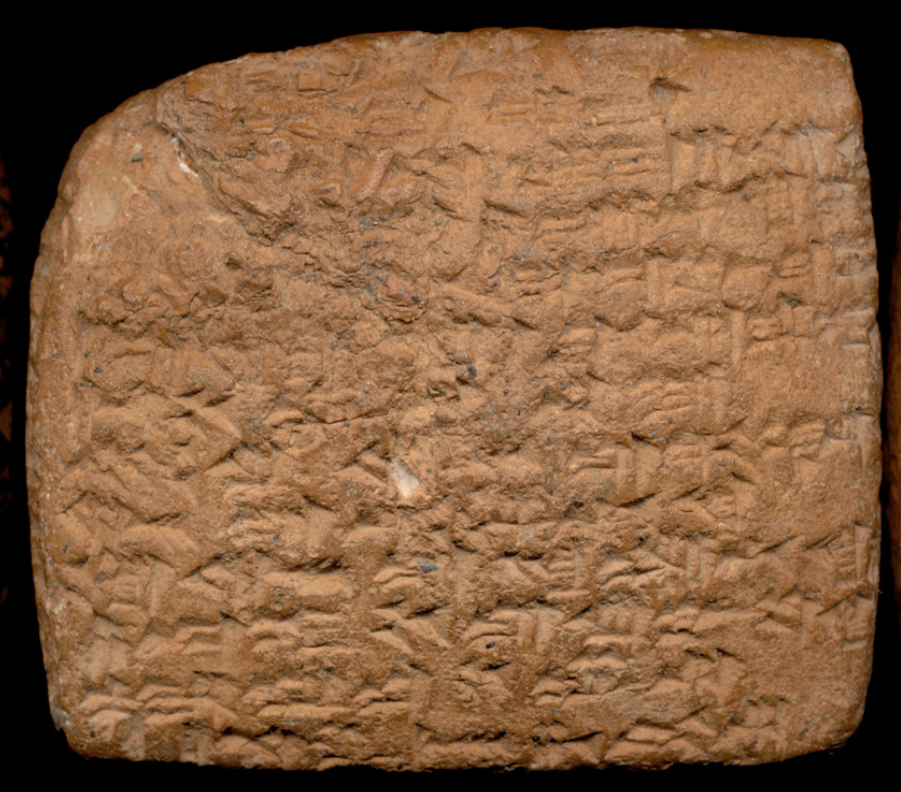
Beginning in 1887, a number of clay tablets were discovered, now known as the “Tel Armana letters.” Many of these use the phrase “land of Jerusalem.” Among the many ancient artifacts which have since been unearthed in the near east, multiple attestations of the phrase “the land of Jerusalem” have been found.
Perhaps the most direct and relevant attestation is found in Tel El Amarna letter #290, first published in 1915 and believed to be as old as the city of Jerusalem itself.3 which translates in part “a town of the land of Jerusalem, Bit-Lahmi by name, a town belonging to the king, has gone over to the side of the people of Keilah.”4
According to the translator, W.F. Albright, “Bit-Lahmi” “is an almost certain reference to the town of Bethlehem, which thus appear for the first time in history.”5
While the Tel Armana letters date to the early years of Jerusalem, we also have attestations of the phrase “land of Jerusalem” at a period much for contemporary to the Book of Mormon. Among the Dead Sea scrolls, in Qumran cave four, scroll 385a often referred to as “Psuedo Jeremiah”, lines one and two translate “Jeremiah the prophet [went out] from before the Lord [and went with] the captives who were taken captive in the land of Jerusalem”6,7 This event, with the mention of captives being taken from Jerusalem, places this account in 587 BC, only 12 years after Lehi and his family left Jerusalem.
The use of the phrase “the land of Jerusalem” in the Book of Mormon, and even Alma’s mention of Jesus’ birth “at Jerusalem which is the land of our forefathers” is in no way inconsistent with other ancient texts. The use of this phrase, unknown in Joseph Smith’s day, and its later attestations discovered in the 20th century in fact serve as evidence for the ancient origins of the text of the Book of Mormon. To quote Daniel C. Peterson in the January 2000 Ensign, “Joseph Smith could not have learned this from the Bible, though, for no such language appears in it.”8

- Bacheler, Origen. Mormonism Exposed, Internally and Externally. New York: O. Bacheler, 1838. pp 25
- Bacheler, Origen. Mormonism Exposed, Internally and Externally. New York: O. Bacheler, 1838. pp 14
- EA 290 artifact entry (No. P271092). (2024, November 6). Cuneiform Digital Library Initiative (CDLI). https://cdli.earth/P271092 (Original work published 2005) ↗
- W. F. Albright, trans., “The Amarna Letters,” in The Ancient Near East: An Anthology of Texts and Pictures, ed. James B. Pritchard (Princeton, NJ: Princeton University Press, 2011), pp 437–440
- W. F. Albright, trans., “The Amarna Letters,” in The Ancient Near East: An Anthology of Texts and Pictures, ed. James B. Pritchard (Princeton, NJ: Princeton University Press, 2011), pp 440 n. 15
- Wise, M. O., Abegg, M. G., Jr., & Cook, E. M. (2005). The Dead Sea Scrolls: A new translation (Rev. ed.). HarperOne pp 446
- Eisenman, R., & Wise, M. (1992). The Dead Sea Scrolls uncovered. Element. pp 56-57 this earlier translation is less complete but does properly render “land of Jerusalem” from the Hebrew
- Peterson, D. C. (2000, January). Mounting evidence for the Book of Mormon. Ensign. ↗